
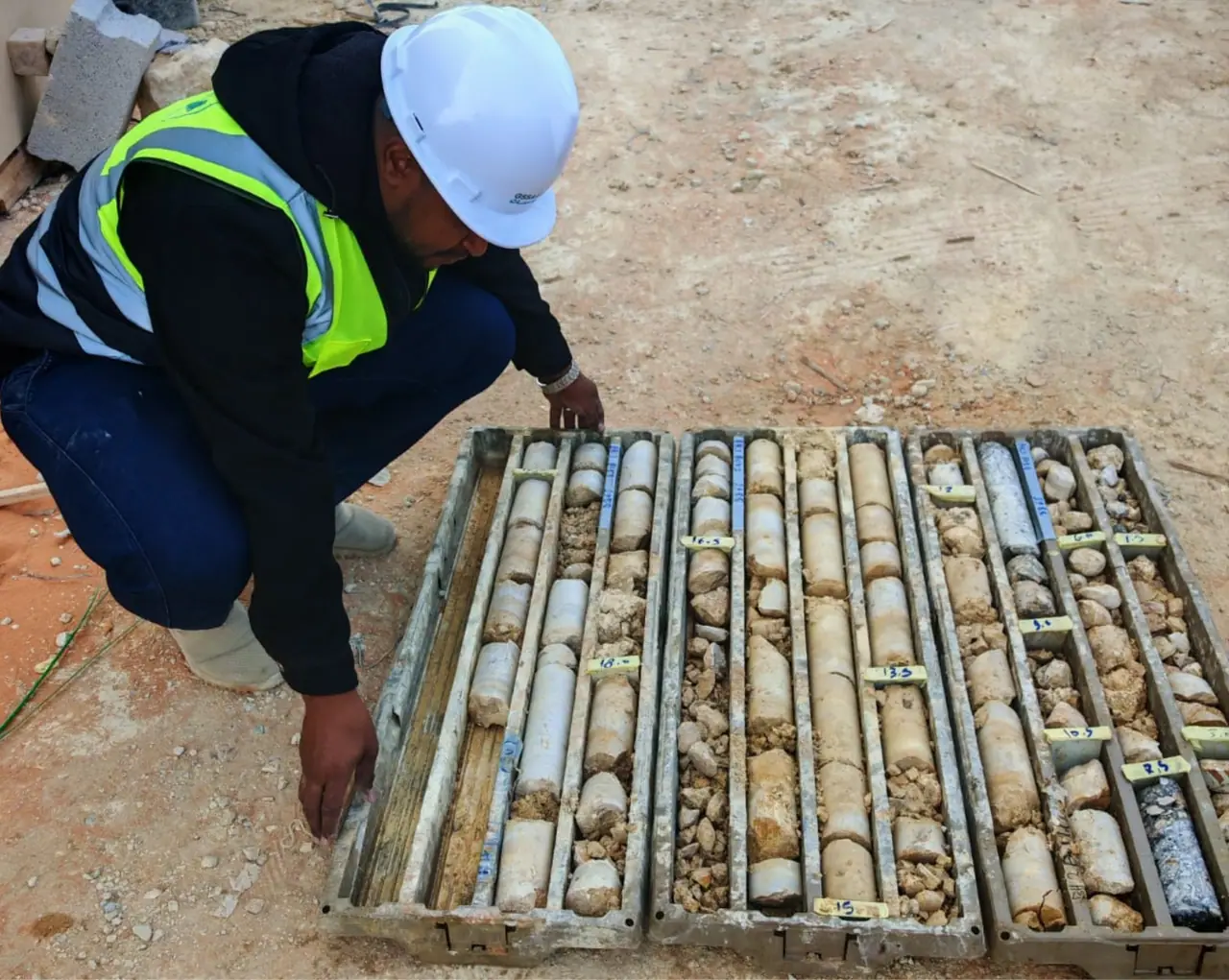
A soil investigation report, also called a geotechnical report, is the document a structural engineer relies on to choose the foundation type and size. It summarises what the boreholes and tests revealed about the ground beneath the site.
What does the report contain?
- A description of the site and of the drilling and investigation work carried out.
- Borehole logs showing the type, thickness and depth of each soil or rock layer.
- The groundwater level, where encountered.
- Field and laboratory results such as classification, moisture, density, collapse, swell, consolidation and shear.
- Chemical results: soluble salts, chlorides, sulfates and pH.
- Foundation recommendations: foundation type, founding depth, allowable bearing capacity and expected settlement.
- Recommendations for excavation, backfill and support where needed.
Why does it matter?
A design based on too little information about the ground can lead to settlement or cracking, and can also produce an over-designed foundation that raises cost for no reason. A good report balances safety and economy.
How to read it
Start with the recommendations: founding depth, bearing capacity and groundwater level. Then review any warnings about collapsible or expansive soils, or salts that attack concrete, because these affect material choice and construction method. The requirements for the study are set by the relevant authorities and the Saudi Building Code, so confirm them before work begins.